
“A conservative is a man with two perfectly good legs who, however, has never learned how to walk forward.” -FDR
TOUGH, TOUGH, TOUGH SAILING.
DESKTALK: I won’t go through this experience in great detail because it’s too, too long a story. Moreover, I don’t know if it’s over yet.
It began as an attempt to save a few dollars. As most people know, my name is Rich. (By the way my name is not spelled R$$$).
To save some $ we thought to quit cable. Well, I as it turned out we didn’t quit (entirely), but we were able to cut the expense quite a bit and improve our Wi-Fi service. (Good deal, Right?) So – We received a package with a new modem and router to replace those we’ve had for maybe15 years. That was a little over a week ago.
And that’s when it got rough.
The equipment came with fairly plain instructions. (Unfortunately, they didn’t know who they sent them to.)
Because I am dumber than a box of broken rocks. It took me (and I am not exaggerating) two days of plugging, unplugging; password printing; standing, crawling around on the floor, sitting; driving back and forth to the museum to watch YouTube “How-to videos, to nearly (but not quite) connect the service. It was exceptionally frustrating – not to mention tiring. I didn’t sleep well.
In the past most folks (including me) would have just called “The Man” and waited for him to show up between the hours of 8am and 8pm. But all the videos made the whole process look so easy. Some even said that it was made easy to purposely avoid having to call “the guy”. So, dumb me – I persisted.
EPILOGUE: Finally I threw my arms up, surrendered, and called “The Man” who was actually “The Woman”. I had to use a cell phone because my landline is also with the cable company. And as it turned out I just needed them to activate the equipment.
That ain’t all. Now, comes the fine tuning; reactivating residual equipment like Alexa and tablets. Well, I believe you get it. If not, call your Cable Guy / Gal, ask to have them send you equipment to upgrade your Wi-Fi service and we’ll all have a good scream together.
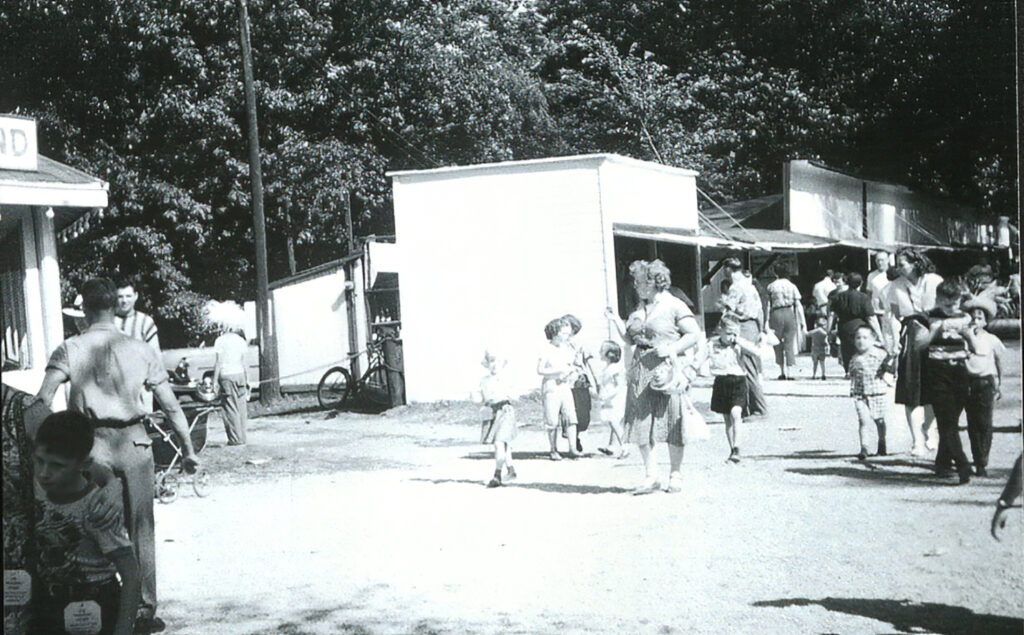
[Author’s Note: The opening graphic was adapted from a black & white pic developed from an old glass photo negative. I made it following the dizzying Wi-Fi problem described above I hope you like it.]

V-TRAINS
YA JUST NEVER KNOW: This short train video had over 1000 hits in three days. I made it quickly (about 30 or 40 minutes) to use with a longer video about the first church in Vermilion. I didn’t think the church video was long enough.
While there was some interest in the church video, It only acquired about 1/3 as many hits in two days. Go figure. I can’t.

This is A VERY SPECIAL NOTE
NEW: I’ve added a “special section” to the “Past 20 Years” part of the page. You will find there nearly (but not all) every video and audio production I’ve published over the last few years. They’re not arranged as nicely as I want them to be. But SOME are there – and I’ll add to them as time passes.

![]()
A VERY RICH COMMENTARY
UNDER THE BUCKEYE TREE - "ROSEDALE #8
Part of the "Black Cat" Series
TOMORROW / WILL BE UNPEOPLED / (FOR NOW (39)) what are these things? / morning fog / early nights / so quiet / (except for trains / rumbling echoes / through the valley.) south / into / the only forests / still / deered & crowed & coyoted / & unpeopled / (for now) – March 4, 2024
VERMILION HISTORY THEATRE: Due to all the distractions surrounding me lately I neglected to keep the link to the History Audio/ Video Theatre. So – click on the name above and visit.
HOMEBOUND (VIDEO POETRY)
I Have Seen Tomorrow
Way back in 1897 when the first editions of The Vermilion News weekly rolled off the newspaper press at the town’s local print shop this (the press pictured in the accompanying photograph) was the press that printed it. At the time the shop was located on the 2nd floor of the old Wells building on Grand Street. It stood north of (next) to the site that is currently (2026) the Jail Bed and Breakfast facility.
To expound some about the location: The Wells Building was located directly across the street from the site of today’s Railroad Barber Shop. South of it was an old clapboard building that at one time housed Rudy Moc’s “Sunset Photography Studio”. Moc’s building was subsequently torn down to make room for the town’s first brick library building which as many will know, later housed the city’s first police station (ergo the “Jail” B&B).
When Pearl and Bessie Roscoe purchased the newspaper and print shop shortly after their marriage in 1901, the newspaper press was part of the purchase. In November of 1904 the printing press, along with 3 or 4 oak cabinets of movable type and sundry other pieces of equipment were moved to a brand-new building just across the tracks a few doors south of the Wells building on the east side of Grand Street.
Bear in mind that this was a time when no public utilities were available in the village yet (i.e. no water, no electric and no natural gas lines). This meant that the print shop printing equipment was powered by a line shaft. A line shaft is a power-driven rotating mechanical shaft, historically used in factories to transmit power from a central source (steam engine, water wheel, gas engine) to multiple machines via belts and pulleys. In the case of Roscoe’s print shop the presses were powered by a gasoline motor outside the building .
Publishing a newspaper before the availability of electricity was, as one might suspect, not only an clerical endeavor, but was also labor intensive work. Because this is true, Vermilion’s newspaper was generally an eight-sheet paper: 4 pages were local news, with the type set by hand; and 4 pages of national and state news printed in Cleveland and transported to town by rail. It was not until about 1906 that the News became what was termed to be at the time “an all-local print” newspaper.
By 1917 with electricity readily available to homes and businesses in the village a new electric typesetting machine had been added to the print shop. Then in October, the old newspaper press that had served the shop and the town so brilliantly for nearly two decades was retired. In its place a new electric powered Stonemetz 2-revolution press capable of printing newspaper pages and many other printing jobs faster and of better quality was purchased. It cost only $1,400. That would be somewhere in the range of $35 to $40 thousand dollars today. So it really was a significant purchase.
The town was growing – becoming more prosperous. And the shop grew with it – until it didn’t. But it still exists as an historical artifact. And its relevance, as both artifact and historical repository, remains. That is in essence one of the most important functions of newspapers whether it be the old Vermilion News or the current pages of the Vermilion Photojournal. They shine a light on our past and illuminate both our todays and our tomorrows. As an old guy – also an old newspaper guy – I can say with confidence that “I have seen tomorrow, and I can tell you that it is there”. Surely, you saw it in a newspaper.
© RNT March 2, 2026

the history of erie county in ohio (Continued)
563ec…ried in 1859 to Catharine Brendel, of Sandusky. She died in 1861, leaving two children. Valentine married his second wife, Barbara Juengling, in 1863. She was born in Germany in 1841. They have had a family of five children. Of the seven, six are now living: Emma, Samuel, Elizabeth, Mary, Valentine jr., and Louisa. Valentine purchased his farm in Groton of 160 acres in 1862, for which he paid forty dollars per acre. He has been trustee of the town for ten years.
ELFERS, FREDERICK, KELLEY’S ISLAND, merchant, grape grower, and postmaster of Kelley’s Island, was born in Hanover, Germany, in 1846. His father died when Frederick was about seven years old. Frederick came to America sometime in July, ‘1 861, and has lived on the island ever since. His first employment was working in the vineyard, and later in the fall attended school to become familiar with the English language. In 1865, when but nineteen years old, he started in business for himself, leasing a vineyard of five and one-half acres from Addison Kelley, working the vineyard for one-half of the crop, for the term of ten years. After the ten years were up Frederick worked the vineyard from year to year; and up to the present season (1888) he has worked said vineyard for twenty-three years, by all means the longest lease on record on the island. He was married in April, 1871, to Sophia Koster, also a native of Hanover Germany. Their family consists of five children, Emma, Arnold, Nellie, Herbert and Helen. Arnold, now fourteen years old, is helping his father in the post office and store when his time is not occupied by school hours. Emma is using her spare time for studying music. In 1876 Frederick became engaged in the mercantile business, when, in the spring of 1876, he started the second store on the island, an undertaking at that time looked upon by some of the wisest heads on the island as certainly destined to be a failure, and predictions were made at that time, that “six months will wind that business up,” arguing from the standpoint, that a man having had no previous experience as a merchant could not succeed as such on the island without many friends and a big barrel of money. Frederick paid no attention to all such remarks, but finished his store building, and then bought a stock of merchandise, giving notice to the public also to come and inspect his stock of goods and prices, and waited for the results, and strange to say the business prospered, and Frederick has been successful ever since. He is a firm believer in the old adage, “wherever there is a will there is a way.” On September 7, 1885, he was appointed postmaster of the island, and holds the same office still. He has served as deputy treasurer of Erie county for six years. Another fact worthy of mention for Erie county might be, that Mr. F. Elfers introduced the first system of electric lighting in Erie county, and is still the only person using electric light on the island. An are light plant, of the Thomson-Housten system, was purchased by Mr. Elfers in April, 1885, and put in operation in June, 1885, thus making it the first in Erie county at that time. His store building…
HISTORY OF ERIE COUNTY OHIO – With Illustrations and Biographical Sketches of Some of Its Prominent Men and Pioneers – Edited by Lewis Cass Aldrich – Syracuse N.Y. – D. Mason & Co., Publishers – 1889